Showing posts with label Animation. Show all posts

Tuesday, 11 June 2019

Lost Boy: End Scene Animating WIP

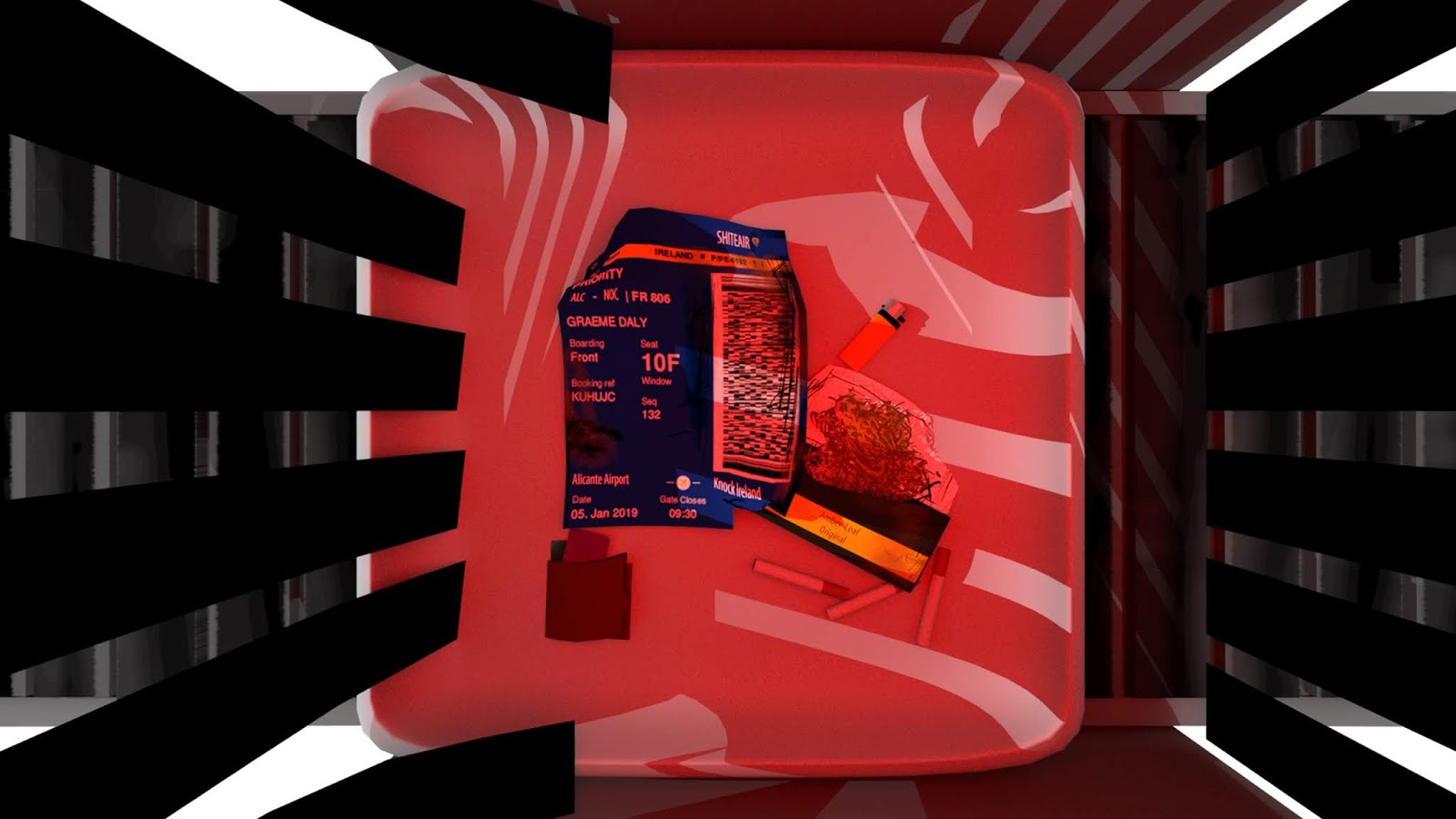
I have been going back and finessing the animation throughout Lost Boy as well as setting up the render settings for each shot - I will upload a progress report soon showing the more polished animation.  Here is a WIP of the start of the ending showing young Graeme and his Umbrella that I didn't get to animate previously, as well as frame renders - a few notes about the frame renders I notice now that the red is much too hot on shot 16 - I really need to render stills on my laptop as the colour quality on my external monitor where I animate with Maya is really subpar, also I forgot to dial up the colour on Present Graeme's Torso for Shot 7 and I think I need another light to the left of his face,

Shot 1 Frame 329

Shot 2 Frame 456
Shot_3_Frame_512

Shot_5_Frame_538
Shot 6 Frame 656

Shot 7 Frame 804
Shot 8 Frame 928 (Ball of tabacco Redner layer)


Shot 8 Frame 928 (Present Graeme Render Layer)
Shot 10_Frame_960

Shot_12_Frame_1587

Shot_13_Frame_1763

Shot_15_Frame_1829


Shot 16_Part_3_Frame_2163 


Lost Boy Shot 55 WIP from Graeme Daly on Vimeo.


Wednesday, 24 April 2019

Major - Lost Boy - Animation Progress #4 - Shot 11

I was originally going to cut this shot for the hand in as it was a big chunk to lip sync but I wanted to do it as it really describes the Present Graeme's character and after hearing the sound that my composer Brian Freeland made I couldn't cut it. Shot 12 is near completion I have just been modelling the assets for that shot, including the clappaboard, conveyer belt and Present Graeme's knick knacks that are inside the airport tray for shot 13.


Lost Boy - Post Viz Shot 11 from Graeme Daly on Vimeo.

 Shot 12 Clappaboard, Microphone Assets

Clappaboard Painted Texture
 Shot 12 Clappa Board, Conveyer Belt Assets
Shot 13 Assets WIP

Friday, 16 November 2018

Minor: Lost Boy - Pre-Viz//Animatic Progress

I have been working on the pre-viz/animatic for Lost Boy. Before I continue with it, I think it is in my best interest to create a shot list as I am finding it difficult to know how many frames a shot should last or how long a shot should linger after I say the lines.  As I am getting inspiration for shots while using Maya it would also be nice to know how many frames I can allow myself to see if I can fit those ideas for certain shots into the film as I don't want to make things too long as Phil mentioned I need to be cut throat in regards to what I will show and cut.

For the elements showing the "Nervous ball of energy" I want those to be rotoscoped in red and black possibly on top of the spherical alpha map, I will do some tests with this. I never shared a 2D abstract animation that I created using the animation toolbar for Photoshop while in Beijing for the animation workshop showing the emotion of anger, I think some of that rotoscope style would work nicely for the nervous ball of energy.
shot_1_shoelace.2 from Graeme Daly on Vimeo.


Abstract 2D Animation

Sunday, 21 January 2018

Film Review: Mary and Max

Figure 1: Mary and Max Poster


Mary and Max (2009) is a claymation animation directed by Adam Elliot. The animation tells the story of two very different characters one being Mary who is a school girl (Figure 2) that is constantly ridiculed and ostroctrised for her appearance. Mary who is in desperate need of communication with anyone as her alcoholic mother who guzzles cooking cherry and chain smokes is a terrible mother figure for her, reaches out and decides to start writing to a man named Max (Figure 2). Max is an obese isolated man living in New York that devours chocolate hot dogs all day and has trouble expressing his emotions as he has asperger’s syndrome. Max and Mary are both whacky and whimsical characters with both having debilitating issues and struggle to feel normal.


Figure 2: Max and Mary

Adam Elliot calls his claymations clayographys (clay biography) in which all of the characters in any of his films are based on real people with real issues with Max even being related to Elliots own pen pall that he has been writing to for over twenty years.  Elliot explains about his characters - "My aim is to highlight and celebrate people’s imperfections and to emphasize that no one is pure or perfect. I base my characters on the people around me and have befriended so many people who get labelled “different.” I feel their stories need to be told; people need to learn about these people, have their lives shared and understood" (Elliot 2009)


Figure 3: Adam Elliot

Elliot has never had any desire of translating his stories into CGI explaining that although stopmation is cumbersome it is always worth the blood, sweat and tears in the end when it hits a nerve with viewers. Elliot attended the Victorian College of the arts in Melbourne where he was planning his first 2D animation entitled "Uncle" where his lecturers advised him that producing the film in stop motion would be more visually pleasing and it was through the advice of his mentors where his love for stop motion and claymation launched. Elliot has produced six films in total comprising of the titles - Uncle (1996), Cousin (1998), Brother (1999), Harvie Krumpet (2003), Mary and Max (2009) and Ernie Biscuit (2015) with Mary and Max being his first feature film. The Director of photographer Gerald Thompson is responsible for brining Elliots vivid vision of Mary and Max to life which cost a total of 8.3 million Australian dollars with a mere 6 animators working around the clock to produce the film from script to screen, taking five years in total. 


The core premise of Mary and Max is that friendship can be between two people no matter how different they are to each other, its also about dealing with difficult adult themes such as alcoholism isolation, depression and suicide with many of these themes also having a hint of humour. claymation films are usually lighthearted and non cynical with many being children cartoons and one would assume at the start of Mary and Max that it is no exception, however The juxtaposition of having a claymation film which delves deep into very intense adult themes and topics is what separates Mary and Max from other claymations. 

The Mise-en-scène also boils down the colour scheme (figure 4) with Mary's world living in Australia having many hues of brown while Max's world of New York has a monochromatic tone with Black and white being the main colour palette. Speaking of his style of animation Elliot describes "I wanted to push the boundaries of feature animation, provide audiences with something new, something with a balance of light and dark, something Disney, Pixar and DreamWorks wouldn't dare touch. All my films are deeply personal and based on the people around me. I try to make films with depth, substance; films that deeply engage, move and make the audience think." (Elliot 2009) It feels strange to watch a claymation that uproots these issues in the characters, however that goes with the whole theme and look of the eerie setting and is something that Elliot perpetuates in all his creations.

Figure 4: Colour scheme

Elliots world of Mary and Max is something that critics and audiences fell in love with. The film was premiered at the Sundance Film festival, Elliot describes "The most exhilarating moment would easily be standing backstage with Robert Redford in Sundance about to show the opening night audience a film that had taken my crew and I five painful years to make. We were the first animated and first Australian film to ever open the festival in its 25- year history Thankfully, they all loved the film and we survived!" (Elliot 2009) Mary and Max won countless awards some of which include the Australian Directors Guild Award for Best Direction in a Feature Film, Ottawa International Animation Festival Grand Prize, and the Annecy International Animated Film Festival Cristal Award for Best Feature. 

Bibliography


Desowitz, B. (2009). 'Mary and Max': Elliot and Clayography. [online] Animation World Network. Available at: https://www.awn.com/animationworld/mary-and-max-elliot-and-clayography 
[Accessed 19 Jan. 2018].

IndieWire. (2009). Adam Elliot, “Mary and Max”: Flaws, Limitations, and Possibilities. [online] Available at: http://www.indiewire.com/2009/01/adam-elliot-mary-and-max-flaws-limitations-and-possibilities-71006/ 
[Accessed 19 Jan. 2018].


Illustration list

Elliot, (2009). "Figure 2: Max and Mary " [image] Available at: https://roosterillusionreviews.com/2016/05/14/saturday-morning-cartoons-mary-and-max-2009/ 
[Accessed 19 Jan. 2018].

Elliot, (2018)."Figure 4: Colour Scheme" [image] Available at: http://absenceofalternatives.com/mary-and-max/ 
[Accessed 19 Jan. 2018].

Elliot, (2009). "Figure 1: Mary and Max Poster" [image] Available at: https://vulpeslibris.wordpress.com/2013/02/13/mary-and-max-a-film-by-adam-elliott/ [Accessed 19 Jan. 2018].

Elliot, (2009). "Figure 3: Adam Elliot" [image] Available at: http://screenanarchy.com/2015/07/interview-adam-elliot-on-being-an-animator-winning-an-oscar-and-feeling-like-an-outsider.html 

[Accessed 19 Jan. 2018].